Teachings of Venerable Webu Sayadaw
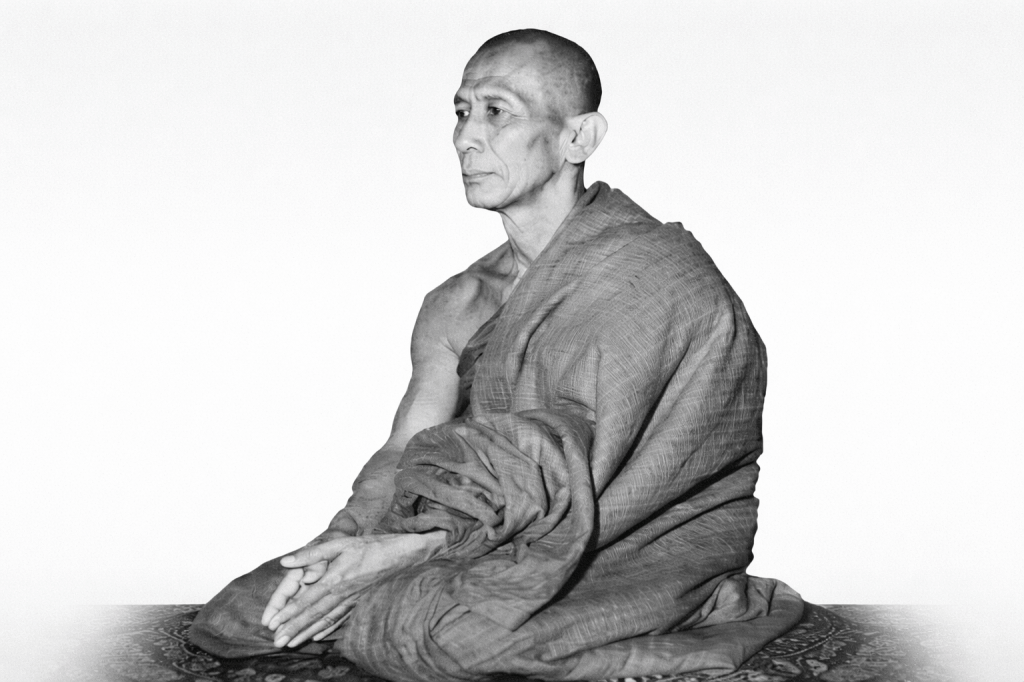
Venerable Webu Sayadaw repeatedly reminded his listeners that the heart of the Buddha’s teaching is simple, direct, and immediately applicable. What truly matters in life is not theory or speculation, but the sincere and continuous practice of morality, concentration, and wisdom.
Moral Conduct as the Foundation
Once a person undertakes moral conduct (sīla), it should be fulfilled completely. Only when moral conduct is perfected can one experience genuine happiness — both in this life and in the future. According to Venerable Webu Sayadaw, only the teachings of the Buddha can provide real and lasting happiness, here and throughout the cycle of rebirth (saṃsāra).
The Buddha’s teachings are preserved in the Tipiṭaka, the Three Collections of the Pāli Canon. Although vast in volume, their essence can be distilled. From the Tipiṭaka arise the Thirty-seven Factors of Awakening, whose essence is the Noble Eightfold Path. The essence of the Noble Eightfold Path, in turn, is the Threefold Training (sikkhā):
- higher morality (adhisīla),
- higher concentration (adhicitta),
- higher wisdom (adhipaññā).
At the core of this threefold training lies the Universal Law (Eko Dhammo).
Training Body and Mind
When body and mind are well restrained, physical and verbal actions naturally become gentle and refined. This is higher morality. As moral conduct strengthens, the mind becomes calm, peaceful, and free from coarseness. This state is known as higher concentration (samādhi).
When concentration becomes firm and sustained, the meditator directly realizes that material phenomena (rūpa) arise and dissolve countless times within a single moment. When the mind (nāma) clearly knows this process of arising and dissolution, true wisdom (adhipaññā) arises.
The Breath as a Gateway to Insight
With every inhalation and exhalation, the flow of air touches a point at or near the nostrils. The contact itself is matter, while the knowing of that contact is mind. Thus, one does not need to speculate about mind and matter or ask others about them. By simply observing the breath, one can know them directly.
When awareness of this touch is continuous, greed (lobha), aversion (dosa), and delusion (moha) do not find an opportunity to arise. As a result, the fires of craving, anger, and ignorance gradually subside.
The Present Moment
The touch of the breath can be known only while it is occurring — not before and not after. This is what is meant by the present moment. In that moment of awareness, one directly knows that there is only mind and matter. There is no “I,” no person, no man or woman. Through direct experience, one realizes the truth of the Buddha’s teaching.
When this understanding arises, one’s view becomes pure. This is right view. One directly distinguishes between mind and matter, attaining the insight known as nāma–rūpa-pariccheda-ñāṇa, the knowledge that clearly differentiates mental and material phenomena.
Time Is Precious
Human life is uncertain. Aging, illness, and death are inevitable, yet the length of one’s life is unknown. Time that has passed is already gone and cannot be reclaimed. What remains should not be wasted.
To be born as a human being, to encounter the teachings of the Buddha, and to have the opportunity to practise are exceedingly rare. Therefore, one should devote one’s remaining time to earnest effort rather than concern over food, comfort, or worldly gain.
Practice, Not Mere Knowledge
A good seed sprouts quickly, but if it is not planted, it will never grow. In the same way, the teachings of the Buddha yield results only when they are accepted and practised. Living with awareness of mind and matter is called knowledge (vijjā). Living without such awareness is ignorance (avijjā).
A life guided by knowledge leads to fortunate destinations, while a life dominated by ignorance leads to suffering.
The State of Mind at Death
According to the Buddha, rebirth is shaped by the mental qualities present at the moment of death. One who dies with craving may be reborn as a hungry ghost; with aversion, in hell realms; with delusion, as an animal. However, one who dies with clear awareness of mind and matter, understanding their arising and dissolution, is reborn in higher realms — as a human, a deva, or a brahmā.
The Path Forward
One who truly knows where they are going does not need to ask others for directions. Likewise, one who lives with awareness knows for themselves whether they are living in knowledge or in ignorance.
Venerable Webu Sayadaw urged his listeners to bring to fruition the perfections (pāramī) accumulated throughout countless lives. Born in a favorable realm and encountering the Buddha’s teaching, nothing prevents sincere practitioners from progressing toward liberation.
Practise with joy, determination, and steadfast effort. Waste not even a single moment. Encourage others to practise as well. When the path is fulfilled and the goal is reached, one will know true and unshakable happiness.
 Dhamma Servants
Leave a comment